

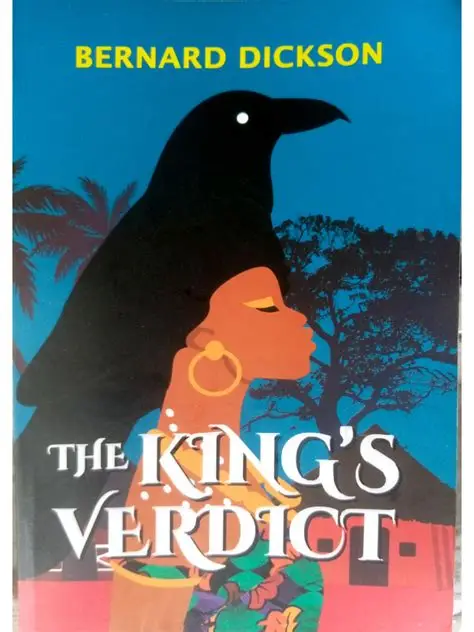
A Complete Book Review on Bernard Dickson’s The King’s Verdict
BOOK REVIEW
Author: Bernard Dickson
Place of Publication: Ibadan
Publishers: Winepress Publising
Year of Publication: 2023
Number of pages: 64
Price: Not Stated
Reviewer: (your name)
Plot summary
NB: DO NOT COPY WHAT IS HERE BECAUSE HUNDREDS OF PEOPLE HAVE ALREADY SEEN IT AND THEY MAY HAVE COPY IT. SO TO AVOID SCORING ZERO OR YOUR ASSIGNMENT IS MARKED AS COPIED WORK KINDLY CONTACT US VIA CALL ON 08127963962 OR YOU USE ANY OF THE ” CONTACT AGENT BUTTON ON THIS WEBSITE
INTRODUCTION
The King’s Verdict is a thought-provoking play that provides readers with insight into the nature of patriarchal society and the challenges women face under traditional cultural practices. Through the experiences of Urediya and her daughter, Adanma, following the death of Urediya’s father, the play examines how customs and traditions can influence women’s rights, social status, and opportunities. It draws attention to the difficulties women encounter when cultural expectations restrict their freedom and prevent them from participating fully in society.
One of the distinctive features of the play is its method of presentation. Each act develops the story progressively, introducing events and conflicts that sustain the reader’s interest and encourage continued engagement with the text. Through this structure, the playwright explores the tensions between established traditions and the desire for social change. The experiences of the central characters reveal the emotional and social consequences of practices that place women at a disadvantage, particularly when they attempt to challenge accepted norms.
Furthermore, The King’s Verdict highlights the struggles of women who seek to free themselves from cultural practices that undermine their dignity and independence. Adanma’s experiences illustrate the difficulties involved in challenging a patriarchal system and pursuing recognition as an individual with rights, abilities, and aspirations. The play encourages readers to reflect critically on traditions that limit women’s opportunities and to consider the importance of fairness, equality, and respect for human dignity. Overall, the text serves as a platform for examining the relationship between culture, gender, and social justice, while emphasising the need for cultural practices to be evaluated in light of their effects on individuals and society.
CONTENTS OF THE BOOK
The content of the book is well organised, with each act following logically from the previous one and making it easier for readers to understand the message the playwright intends to communicate. The play is divided into five acts, each of which is further subdivided into scenes. This arrangement gives the story a clear and progressive structure, allowing events to unfold in a way that sustains the reader’s interest and improves understanding of the plot.
Each act introduces developments that encourage readers to think about what might happen next. The gradual unfolding of events creates suspense and curiosity, motivating readers to continue reading until they discover how the conflicts and situations presented in the play will be resolved. This effective arrangement not only makes the play engaging but also helps readers follow the characters’ experiences and understand the themes explored throughout the work.
SETTING OF THE PLAY
Based on the names of the characters and the cultural practices portrayed by the playwright, The King’s Verdict appears to be set in southeastern Nigeria, particularly within the Igbo cultural environment. This region comprises Abia, Anambra, Ebonyi, Enugu, and Imo States, where Igbo traditions, customs, and social values play significant roles in community life. The cultural elements presented in the play provide readers with insight into traditional Igbo society and the expectations placed on individuals, particularly women, within a patriarchal setting.
The play also appears to draw on a precolonial traditional setting, before the establishment of British colonial rule in the region. This historical context is important because it helps readers understand the influence of traditional authorities, customary laws, and communal values on the lives of the characters. Through its portrayal of these cultural practices, the play explores the relationship between tradition, gender roles, and individual freedom. However, the precise geographical location and historical period should be confirmed from the text itself, as character names and cultural references alone cannot establish the setting conclusively.
ORGANIZATION OF THE CONTENTS
The book is divided into five Acts, with the first Act having Five scenes, the second having three scenes. The third has one scene. The fourth having two scenes and lastly the fifth has one scene. The organization of the book starts from.
A Complete Book Review on Bernard Dickson’s The King’s Verdict
ACTS ONE
Scene One: starts with the unveiling of the sitting room of the deceased Ejike On and his Obi which is a wide rectangular room with three doors and the mourning passing by Urediya and Adanma (his wife and daughter) before the arrival of Ma and making known his intention of marrying his late brother’s wife and the intention ensues afterwards.
Scene two: This speaks about the conversation between Mazi Okeke and Mazi Orji a Urediya and the payment of the debts owed to him by Mazi Orji. In this scene, Maz was accusing Mazi Okeke of trying to take Urediya from him by the way he looks at to which he replied that he only tries to help her fix her roof, something Mazi Orji has not done.
EVALUATION
This book is written to talk about the cultural relegation most women witness when they try to tackle obsolete cultural practices in a patriarchal society that does not see women as people that can make impact in the society other than to get married and have kids. The book gives an insight to what a typical Igbo cultural setting used to look like.
CONCLUSION
The play is written to meet the needs of students needs who desire to broaden their knowledge and have a critical knowledge about what an Igbo cultural practices about women used to be all about before women started fighting this and becoming more relevant and heard in the society.
RECOMMENDATION
It is strongly recommended that the play should be introduce into the curriculum for both secondary and higher education of learning because awareness at that stage will help to breath a better society where everyone irrespective of gender, race and culture will be seen as equal.
References
Bernard, Dickson. (2023). The King’s Verdict. Winepress Publishing, Ibadan, Oyo State, Nigeria




No comments yet. Be the first to share your thoughts.