
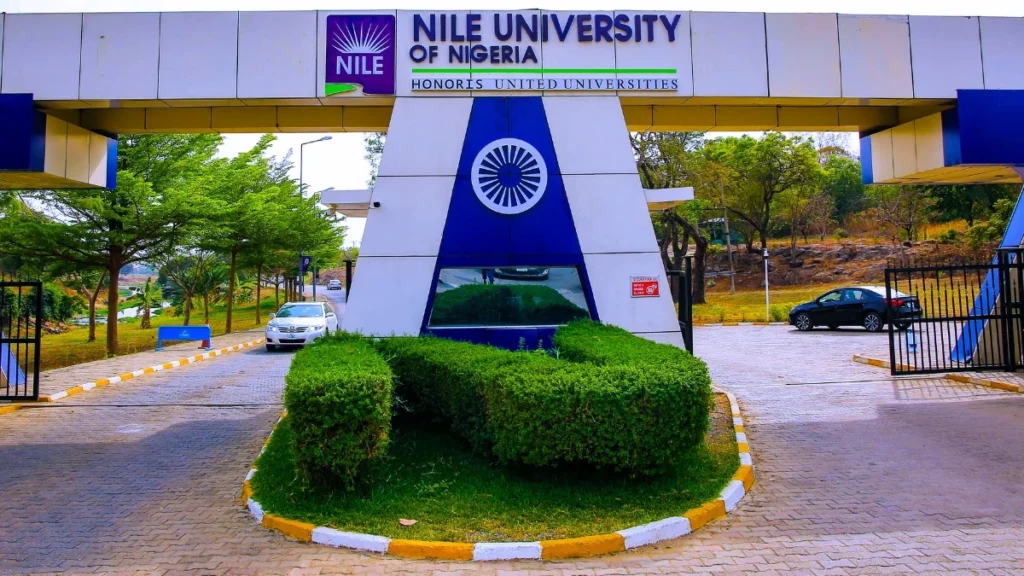
Nile University of Nigeria has announced recruitment opportunities for qualified professionals seeking academic and non-academic employment in 2026. The recruitment exercise covers teaching, technical and specialist administrative positions, providing opportunities for experienced academics, researchers, technical professionals and candidates with relevant business and technology skills.
The vacancies include positions such as Senior Lecturer, Lecturer I, Lecturer II and Technologist II, alongside specialist roles in human resources, information technology, corporate communications, marketing, education and business intelligence, and data analysis. The qualifications, professional experience and application requirements differ according to the position.
For job seekers interested in working in the higher education sector, the recruitment exercise offers an opportunity to consider roles that match their academic background, professional expertise and career objectives. However, candidates should examine each vacancy carefully before submitting an application because meeting the general requirements for university employment does not automatically establish eligibility for every advertised position.
This article provides an overview of the Nile University recruitment exercise for 2026, the available academic and non-academic positions, relevant qualifications, application procedures, important deadlines and practical advice for preparing a competitive application.
Overview of Nile University Recruitment 2026
Nile University of Nigeria is a private multidisciplinary university located in Abuja, Federal Capital Territory. Established in 2009, the institution offers undergraduate and postgraduate programmes across several academic disciplines, including engineering, computing, science, law, environmental sciences, management sciences, arts and social sciences, and health sciences.
The university’s academic activities require qualified lecturers, researchers and technical personnel, while its administrative and operational functions depend on professionals with expertise in areas such as human resources, information technology, communications, marketing and data analysis.
The 2026 recruitment exercise covers opportunities across these different functions. Applicants are expected to demonstrate the qualifications, experience and practical competencies required for their chosen positions.
Candidates should note that the recruitment exercise does not have one universal closing date for every vacancy. Some specialist positions have an advertised deadline of 30 October 2026, while the closing dates for other roles should be confirmed from their individual vacancy notices.
Applicants should therefore identify the specific position they intend to pursue and establish its current status before completing their applications.
Available Academic Positions at Nile University
The academic recruitment exercise covers teaching and research positions in selected departments. These roles are intended for candidates whose educational qualifications, research experience and professional competencies correspond with the requirements of the advertised positions.
1. Senior Lecturer
Nile University is inviting applications for Senior Lecturer positions in selected academic departments.
The advertised departments include:
- Computer Sciences
- Software Engineering
- Mechatronics Engineering
- Architecture
- Quantity Surveying
- Chemistry
- Political Science and International Relations
- Estate Management
The Senior Lecturer position is intended for experienced academics who can contribute to teaching, research, student supervision and academic administration.
Candidates applying for this position must possess a PhD in the relevant field and at least six years of experience in teaching, research and administration. The vacancy information also specifies a minimum of seven publications in reputable journals, together with evidence of continuing research and the ability to supervise students.
Applicants should demonstrate a record of scholarly publications and experience supervising undergraduate and postgraduate students. Professional body affiliation is also listed among the requirements.
Other expected competencies include strong written and oral communication, effective time management, organisational ability and the capacity to complete assignments independently. Candidates should also be comfortable using Microsoft Office applications and video conferencing tools such as Microsoft Teams.
Applicants should ensure that their academic CV presents their teaching experience, research interests, publications, student supervision and administrative responsibilities clearly.
2. Lecturer I
The Lecturer I vacancies cover several disciplines within the university’s academic departments.
The advertised fields include:
- Software Engineering
- Cybersecurity
- Physics
- Biology, Microbiology and Biotechnology
- Economics
- Mechatronics Engineering
- Computer Science
The stated minimum qualification for the Lecturer I position is a PhD in the relevant discipline, together with at least three years of experience in teaching, research and administration.
Applicants are expected to demonstrate a substantial record of scholarly publications and evidence of undergraduate and postgraduate supervision. They should also possess strong communication skills, good organisational abilities and the capacity to manage academic responsibilities effectively.
Professional body affiliation is listed among the requirements. Candidates should also be proficient in relevant office applications and online collaboration tools.
A strong application should show how the candidate’s research and teaching experience relate to the department in which they intend to work. Applicants should avoid submitting a general academic CV that does not clearly establish their suitability for the selected discipline.
Those applying for Lecturer I should pay particular attention to the evidence of research productivity and student supervision included in their application.
3. Lecturer II
The advertised Lecturer II opportunities cover the following areas:
- Information Communication Engineering
- Software Engineering
The stated qualification requirement allows candidates with a PhD in the relevant field or candidates with a master’s degree and at least three years of relevant teaching, research and administrative experience in a recognised university.
Applicants are also required to have at least two journal publications.
Additional expectations include strong oral and written communication skills, effective time management, organisational competence and the ability to work independently while meeting deadlines. Professional body affiliation and proficiency in office applications and online meeting tools are also listed.
Candidates should read the detailed requirements carefully to establish which qualification route applies to them. Possessing a master’s degree alone does not automatically satisfy the stated requirements where relevant university experience and publications are also required.
Applicants should clearly identify their highest qualification, relevant teaching experience, research contributions and publication record.
4. Technologist II
Nile University is also advertising Technologist II positions in selected technical departments.
The listed areas of specialisation are:
- Mechatronics
- Civil Engineering
- Chemistry
- Physics
The position is suitable for candidates with the technical qualifications and practical experience required to support laboratory activities, technical operations and other departmental functions.
The stated minimum educational requirement is a bachelor’s degree or Higher National Diploma in the relevant area of specialisation from an accredited institution.
Candidates must also possess at least two years of post-qualification experience in the relevant field. Membership of an appropriate professional body, together with a practising licence where required by the stated conditions, is another listed requirement.
Applicants should demonstrate practical competence relevant to their chosen technical discipline. Depending on the specialisation, useful evidence may include experience operating equipment, supporting laboratory activities, maintaining technical systems, following safety procedures or assisting with practical teaching.
These examples describe the kinds of experience candidates may wish to highlight when relevant to their actual work history. Applicants must still follow the specific requirements attached to their chosen vacancy.
Strong communication skills, organisational ability and proficiency in relevant office applications are also important.
Available Non-Academic Positions at Nile University
The non-academic recruitment exercise covers specialist and administrative roles outside conventional university teaching positions. These opportunities may interest candidates with experience in business operations, human resources, technology, communications, marketing and data analysis.
The university’s advertised non-academic opportunities include the following roles.
1. Officer, HR Rewards and Administration
The Officer, HR Rewards and Administration position is relevant to professionals whose experience relates to human resources operations, employee administration and compensation support.
Depending on the responsibilities specified in the full vacancy description, relevant experience may include maintaining employee records, supporting administrative processes, handling personnel documentation and assisting with rewards or benefits administration.
Candidates should review the detailed requirements to establish the required educational qualification, years of experience, technical skills and other conditions.
Applicants should tailor their CVs to demonstrate relevant human resources experience rather than relying on a general administrative profile.
2. Specialist, IT Operations
The Specialist, IT Operations position may interest candidates with relevant experience in information technology support, systems operations and technical service delivery.
Applicants should examine the detailed vacancy description to identify the particular technical competencies required. Depending on the role’s responsibilities, relevant experience could involve troubleshooting, system maintenance, user support, IT infrastructure or operational monitoring.
Candidates should highlight practical experience and clearly identify the systems, technologies and responsibilities they have handled professionally.
The exact qualification and experience requirements should be confirmed from the current vacancy notice before applying.
3. Professor
The recruitment exercise also includes a Professor position. This is a senior academic appointment intended for a candidate whose scholarly standing and professional experience meet the university’s requirements for the advertised discipline.
Applicants considering this position should pay close attention to the academic qualifications, teaching and research experience, publication record, supervision history and other criteria specified in the vacancy notice.
A professorial application ordinarily requires a detailed academic CV that demonstrates sustained scholarly contributions. Candidates should present their research achievements, publications, academic leadership and relevant professional activities clearly and accurately.
The specific department, required years of experience and other appointment conditions should be verified in the individual advertisement.
4. Specialist, Corporate Communications
The Specialist, Corporate Communications position may suit professionals with experience in organisational communication, media relations, public information and institutional messaging.
Relevant experience can include preparing communication materials, coordinating publicity activities, managing media enquiries, supporting internal communications and maintaining consistent organisational messaging, where these duties match the vacancy requirements.
Candidates should demonstrate their ability to write clearly, communicate professionally and handle information responsibly.
Where appropriate, applicants may include a concise record of communication projects or professional achievements that directly relate to the role. Any work samples should be included only where permitted by the application instructions.
5. Marketing Officer
The Marketing Officer vacancy may interest candidates with experience in marketing, customer engagement, campaign coordination and business development support.
Applicants should establish the specific responsibilities and qualifications stated in the vacancy description before applying.
Relevant professional experience may include preparing marketing materials, coordinating campaigns, supporting customer acquisition, monitoring campaign performance or assisting with market research.
Candidates should emphasise measurable achievements where reliable figures are available. For example, they may explain how they contributed to a campaign, improved an operational process or supported customer engagement.
However, applicants should not exaggerate results or claim responsibility for achievements they cannot substantiate.
6. Specialist, Education and Business Intelligence
The Specialist, Education and Business Intelligence position is relevant to candidates with expertise in data analysis, business intelligence, reporting and evidence-based decision-making.
The role’s advertised responsibilities include developing and maintaining dashboards, analysing institutional performance data, monitoring indicators and preparing reports that support management decisions.
Other relevant activities include trend analysis, forecasting, performance measurement, data integration and the development of reporting standards.
The stated requirements include a bachelor’s degree in a relevant field such as Data Science, Statistics, Economics, Business Analytics, Computer Science or Mathematics. The advertised experience requirement is four to six years in business intelligence, analytics or a related area.
Candidates should also demonstrate advanced skills in Power BI or Tableau, strong SQL and Excel abilities, experience with data modelling and dashboard development, and an understanding of how analytical findings can support organisational performance.
Experience with education-sector analytics is identified as an advantage.
Applicants should prepare a CV that demonstrates relevant analytical projects, reporting experience and technical capabilities. Where permitted, a portfolio of dashboards or analytical work may help demonstrate practical competence.
7. Specialist, Data Analyst / Education and Business Analyst
The Specialist, Data Analyst / Education and Business Analyst position is another opportunity for candidates with relevant analytical and business intelligence experience.
Professionals interested in this role should review the full vacancy description to establish the precise qualification, experience and technical requirements.
Candidates should be prepared to demonstrate their ability to work with data, identify meaningful patterns, prepare accurate reports and communicate findings clearly to decision-makers.
Relevant experience may involve statistical analysis, spreadsheet modelling, data visualisation, database queries, business reporting or performance analysis, depending on the requirements of the position.
The advertised closing date for this specialist position is 30 October 2026. Interested candidates should verify that the vacancy remains open and submit their applications before the stated deadline.
General Requirements for Nile University Recruitment 2026
The requirements for the recruitment exercise vary by position. There is no single qualification that makes a candidate eligible for all academic and non-academic vacancies.
Before applying, candidates should examine the specific requirements for their preferred role.
The following areas deserve particular attention.
Educational qualifications
Applicants must possess the qualifications specified for their chosen position. Academic appointments may require a PhD or a master’s degree combined with relevant university experience, while technical and specialist roles may require qualifications in engineering, computing, statistics, business or another relevant discipline.
Candidates should ensure that their qualifications correspond with the field of specialisation stated in the advertisement.
Relevant professional experience
Work experience is an important consideration for several advertised positions.
Academic applicants should identify their teaching, research, supervision and administrative experience. Technical applicants should highlight practical work relevant to their specialisation, while non-academic applicants should demonstrate the experience and skills required for their chosen function.
The duration and type of experience must meet the requirements specified in the vacancy notice.
Research and publications
Candidates applying for academic positions should pay close attention to research and publication requirements.
Where publications are required, applicants should present accurate details of their scholarly work, including publication titles, journals and other relevant information requested by the university.
They should also identify research interests, supervision experience and other academic contributions that demonstrate their suitability.
Technical and professional skills
Applicants should identify the technical skills required for their chosen position and provide evidence of their competence.
For example, candidates applying for data-related positions should demonstrate relevant analytical tools and techniques. Technologists should highlight practical technical experience, while academic candidates should show that they can use appropriate digital tools to support teaching, research and administrative responsibilities.
Communication and organisational ability
Communication, time management and organisational skills are relevant across several advertised roles.
Applicants should ensure that their CVs are clear, well organised and free from avoidable errors. They should also demonstrate how their experience prepares them to manage responsibilities, work with colleagues and complete assignments effectively.
Application Closing Date for Nile University Recruitment 2026
Candidates should pay attention to the deadline for each vacancy because the recruitment exercise does not necessarily have a single closing date.
The advertised deadline for the Specialist, Education and Business Intelligence position and the Specialist, Data Analyst / Education and Business Analyst position is 30 October 2026.
The closing dates for other advertised positions should be checked in their individual vacancy notices. Applicants should not assume that every academic and non-academic role closes on the same date.
Since recruitment information can change, candidates should verify the current vacancy status before submitting an application. A position that appeared in an earlier announcement may have a different deadline or may no longer be accepting applications.
Applicants are encouraged to begin preparing their documents early rather than waiting until the final day. This allows time to correct errors, confirm eligibility and ensure that all required materials are submitted properly.
How to Apply for Nile University Recruitment 2026
Interested and qualified candidates should apply through the university’s designated recruitment process.
The appropriate application method depends on the position. The university provides a careers page listing academic and technical vacancies, alongside application forms for academic and non-academic recruitment.
Candidates should follow these steps.
Step 1: Identify the position that matches your qualifications
Review the available vacancies and select a role that corresponds with your educational background, experience and professional skills.
Academic applicants should pay attention to the department, required degree, years of experience and publication criteria. Non-academic applicants should focus on the responsibilities and competencies required for their preferred specialist role.
Do not apply solely because a position title appears attractive. Establish that you meet the stated minimum requirements before proceeding.
Step 2: Review the complete vacancy description
Read the full advertisement for your selected position.
Confirm the educational qualifications, experience requirements, professional memberships, technical skills, application method and closing date.
If a requirement is unclear, seek clarification through an appropriate university contact before submitting your application.
Step 3: Prepare an updated CV
Your CV should provide an accurate account of your education, work experience, skills and professional achievements.
Academic applicants should give appropriate attention to teaching experience, research interests, publications, supervision and relevant academic service.
Non-academic applicants should emphasise their professional experience, technical abilities, responsibilities and achievements that relate directly to the selected position.
Use clear headings and consistent formatting. Check spelling, dates and contact details before submission.
Step 4: Complete the appropriate application form
Follow the instructions for the specific vacancy. Where the university directs candidates to complete an online application form, provide the requested information accurately.
The application process may request personal details, educational qualifications, employment history and other information relevant to the role.
Academic applicants may also be asked to provide research and publication information and upload certificates or other supporting documents.
Ensure that all required fields are completed before submitting the form.
Step 5: Upload the required supporting documents
Prepare the documents specified in the application instructions.
Depending on the position, these may include an updated CV, academic certificates, professional qualifications or other relevant supporting records.
The academic application form specifies PDF format for the CV and a maximum file size of 1 MB. Applicants using that form should ensure that their documents meet these requirements.
Do not upload irrelevant or unnecessary personal information. Follow the instructions concerning file formats, document size and any additional attachments.
Step 6: Submit your application before the deadline
Review your application carefully before submission.
Check that the correct position has been selected, your details are accurate and all required documents have been uploaded successfully.
For vacancies with a 30 October 2026 deadline, complete the process before the closing date. If another position has a different deadline, follow the date stated in its individual advertisement.
Retain any acknowledgement or confirmation provided after submission.
Step 7: Monitor your communication channels
After applying, check your email and other relevant communication channels for updates.
The university states that only shortlisted candidates will be contacted for the academic and technical positions described on its careers page. Applicants should therefore ensure that their contact details are correct and remain accessible.
Submitting an application does not guarantee an interview or appointment. Candidates should continue considering suitable opportunities while awaiting a response.
Important Advice for Applicants
A successful application begins with careful preparation. Candidates should avoid sending identical applications for unrelated roles without adjusting their CVs to reflect the requirements of each position.
For academic vacancies, a well-presented publication record and a clear account of teaching and research experience can help the selection team assess suitability. Applicants should ensure that every qualification and publication listed in their documents is genuine and accurately described.
For technical and specialist positions, applicants should explain how their skills relate to the work involved. A CV that simply lists software applications or general abilities may not communicate the depth of a candidate’s experience. Where relevant, describe the systems used, responsibilities handled and outcomes achieved.
Candidates should also be careful when interpreting qualifications. Meeting the minimum requirements makes an applicant eligible for consideration, but it does not guarantee selection. Recruitment decisions may depend on the full criteria, relevant experience, interview performance and the needs of the institution.
Finally, applicants should remain alert to fraudulent recruitment messages. Nile University states that it does not demand payment from candidates in exchange for employment. Anyone asked to pay money to secure a position should treat the request with caution and verify the communication through an appropriate university contact.
Frequently Asked Questions About Nile University Recruitment 2026
Is Nile University recruiting in 2026?
Nile University of Nigeria has advertised academic and non-academic recruitment opportunities for 2026. Applicants should check the current status of their preferred vacancies before applying.
Which academic positions are available?
The advertised academic and technical positions include Senior Lecturer, Lecturer I, Lecturer II and Technologist II, covering selected departments in computing, engineering, science, architecture, quantity surveying, economics, political science and related fields.
Which non-academic positions are available?
The advertised specialist and administrative opportunities include Officer, HR Rewards and Administration; Specialist, IT Operations; Professor; Specialist, Corporate Communications; Marketing Officer; Specialist, Education and Business Intelligence; and Specialist, Data Analyst / Education and Business Analyst.
What is the application deadline?
The advertised closing date for the Specialist, Education and Business Intelligence and Specialist, Data Analyst / Education and Business Analyst positions is 30 October 2026. Candidates should confirm the deadline for every other vacancy from its individual advertisement.
Can candidates with a bachelor’s degree apply?
Eligibility depends on the position. Some roles specify a bachelor’s degree or HND, while academic appointments and specialist positions may require postgraduate qualifications, relevant experience, publications or additional technical competencies.
Candidates should follow the exact requirements for their chosen vacancy.
Is there an application fee?
Applicants should follow the university’s official recruitment instructions. Nile University states that it does not demand payment from candidates in exchange for employment. Candidates should not pay anyone who promises to guarantee recruitment.
Will every applicant be contacted?
No. The university states that only shortlisted candidates will be contacted for the academic and technical vacancies described on its careers page. Applicants should ensure that their contact details are accurate and monitor their communication channels.
Conclusion
The Nile University academic and non-academic recruitment exercise for 2026 presents opportunities for qualified professionals across teaching, research, technical services, human resources, information technology, communications, marketing and data analysis.
The available roles have different educational, professional and experience requirements. Candidates should therefore identify the position that best matches their qualifications, read the complete vacancy description and prepare an application that demonstrates their suitability.
Applicants interested in the specialist data and business intelligence vacancies should pay particular attention to the advertised 30 October 2026 deadline. Those pursuing other positions should verify the applicable closing date and confirm that the vacancy is still open.
Careful preparation, accurate documentation and strict adherence to the application instructions will help candidates avoid preventable mistakes. Prospective applicants should also remember that no payment is required to secure employment and should be cautious of anyone claiming to offer guaranteed recruitment.
Before submitting an application, confirm the current vacancy details, meet the stated requirements and ensure that all information supplied is accurate. These steps will help you approach the Nile University recruitment exercise professionally and make an informed decision about the opportunities available.



No comments yet. Be the first to share your thoughts.