
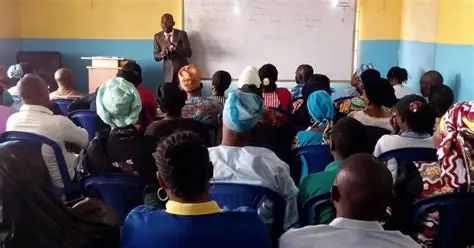
Many parents in Nigeria want to continue their education but struggle to find the right time, money and opportunity to do so. Between raising children, paying school fees, managing household expenses and working to earn a living, returning to school can seem difficult.
Some parents stopped their education after secondary school because of financial challenges. Others obtained a diploma or university degree but could not continue to postgraduate studies. There are also parents who want to acquire new skills, improve their professional qualifications or change careers after spending several years in the same job.
The good news is that furthering education as a parent is possible without necessarily abandoning existing responsibilities. Nigerian institutions offer different routes, including open and distance learning, part-time university programmes, professional certifications, adult education and vocational training.
The most suitable option depends on your previous qualifications, available budget, work schedule and the outcome you want to achieve.
1. Consider the National Open University of Nigeria (NOUN)
The National Open University of Nigeria (NOUN) is one of the options parents can consider when looking for a flexible way to obtain a formal qualification.
Unlike conventional university programmes that usually require students to attend regular physical lectures, open and distance learning allows students to study more independently. This can make it easier for parents to combine education with employment and family responsibilities.
NOUN offers undergraduate and postgraduate programmes across different fields, subject to the admission requirements for each programme.
Parents who want to obtain their first degree can investigate available undergraduate courses, while those who already have relevant qualifications may consider postgraduate programmes.
Who should consider NOUN?
NOUN may be suitable for:
- Parents who work full-time and cannot attend conventional daily lectures.
- Adults who completed secondary school but have not obtained a university degree.
- Parents who want to return to education after several years away from school.
- Workers seeking a formal qualification to support their career development.
- Adults who need a learning arrangement that allows them to manage other responsibilities.
How to apply to NOUN
To begin, visit the official university website at https://nou.edu.ng/.
Navigate to the admission section and review the available programmes, entry requirements and application instructions. Choose a programme that matches your qualifications and career objectives.
Complete the application using the official admission portal and follow the instructions for payment, document submission and screening.
Before applying, confirm the current fees, available study centres, programme duration and examination arrangements. Flexible learning does not mean that every programme can be completed entirely online or without attending any required physical activity.
2. Enrol in a University Distance Learning Programme
Parents who prefer to study at a conventional university can investigate its distance learning or continuing education centre.
Several Nigerian universities have established units that provide flexible study arrangements for people who cannot participate in regular full-time programmes.
The National Universities Commission publishes information about approved university distance learning centres. Parents should use the commission’s guidance and the university’s official website to verify that a programme is approved.
Examples of institutions with distance learning options include:
- University of Ibadan: Its Distance Learning Centre offers undergraduate programmes through flexible learning arrangements. Its official website is https://dlc.ui.edu.ng/.
- University of Abuja: Its Centre for Distance Learning and Continuing Education provides open and distance learning as well as weekend part-time options. Visit https://uniabujacdlce.ng/.
- University of Lagos: Its Distance Learning Institute provides programmes for eligible candidates. Visit https://dli.unilag.edu.ng/.
- Lagos State University: Its open and distance learning institute is another option to investigate. Visit https://lasu.edu.ng/ for official university information.
Programme availability, admission periods and entry requirements vary by institution. Parents should check the current prospectus rather than assume that every course is offered through distance learning.
Advantages of distance learning for parents
Distance learning can reduce the need to travel to campus frequently. Depending on the programme, students may be able to access learning materials online, study at home and arrange their reading around work and family commitments.
However, students must still make time for assignments, examinations, practical sessions and other compulsory academic activities. Parents should understand these requirements before paying application fees.
3. Apply for a Part-Time University Programme
Another option is to enrol in a part-time programme at a recognised Nigerian university.
Part-time programmes are designed to provide an alternative to conventional full-time study. Some institutions schedule lectures during weekends, evenings or other designated periods to accommodate working students.
This route may be appropriate for parents who prefer face-to-face interaction with lecturers and classmates but cannot leave their jobs to study full-time.
What can parents study part-time?
Available programmes depend on the institution, but options may include:
- Business administration and management.
- Accounting and finance.
- Education and educational management.
- Public administration.
- Computer science and information technology.
- Mass communication and related fields.
Not every university offers all these courses on a part-time basis. Parents should confirm the availability and accreditation status of their preferred programme before applying.
How to choose a suitable part-time programme
Consider how often you will need to attend lectures, the distance from your home or workplace, the total cost of the programme and whether the schedule is compatible with your family responsibilities.
Ask the institution about the duration of study, examination arrangements and any compulsory attendance requirements.
Do not choose a programme solely because its lectures take place on weekends. The overall workload must still be manageable alongside your job and responsibilities at home.
4. Return to School Through Direct Entry
Parents who already possess certain qualifications may not need to begin another university degree from the first year.
Depending on the course and the institution, holders of relevant National Diploma (ND), Nigeria Certificate in Education (NCE), Higher National Diploma (HND), recognised diplomas or other accepted qualifications may qualify for Direct Entry admission.
Direct Entry requirements differ by programme. Having a diploma or another qualification does not automatically guarantee admission into the second or third year of every degree course.
Steps to take
First, identify the course you want to study and check its admission requirements. Then confirm whether your existing qualification is accepted and whether you need particular O’Level credits or other supporting documents.
For programmes that require JAMB Direct Entry registration, consult the official JAMB website at https://www.jamb.gov.ng/ for the applicable procedures.
Before making a decision, ask the university to clarify your proposed entry level and whether any additional requirements apply.
This route can be useful for parents who want to upgrade an existing qualification without repeating academic work unnecessarily.
5. Obtain a Professional Certificate
Not every parent needs another degree to improve their career prospects. In some situations, a professional certificate or a recognised short course may be a more practical option.
Professional training can help workers develop specialised knowledge, improve their technical competence or prepare for a different role.
For example, a parent working in administration may consider training in project management, human resources or office technology. Someone running a small business may benefit from bookkeeping, digital marketing, customer service or business management training.
Parents interested in technology can investigate suitable courses in areas such as data analysis, web development, cybersecurity fundamentals and digital productivity.
Where can parents obtain professional training?
Options include recognised professional bodies, accredited training providers, university continuing education centres and reputable online learning platforms.
Before enrolling, check the organisation issuing the certificate, the course content, the total cost and whether employers in your field recognise the qualification.
Be cautious about programmes that promise guaranteed employment, automatic promotion or unusually high salaries after only a few days of training.
A certificate is most useful when it develops relevant skills and is recognised in the field where you intend to work.
6. Learn a Practical Skill or Trade
Parents who want to increase their income or establish a small business can consider vocational education.
Vocational training focuses on practical abilities that can be used for employment or self-employment. Depending on the provider, courses may last a few weeks or several months.
Possible areas include:
- Fashion design and tailoring.
- Catering and food production.
- Photography and video editing.
- Hairdressing and beauty services.
- Electrical installation and other technical trades.
- Soap production and selected household products.
- Digital skills and basic computer operations.
- Phone repairs and other technical services.
The right course depends on local demand, your interests, the tools required and the amount of money you can invest in starting work after training.
NOUN’s Directorate for Entrepreneurship and General Studies, for example, advertises vocational training in areas such as fashion design, leatherwork, branding, photography and video editing. Delivery options and course details should be confirmed directly with the university.
Parents can also investigate programmes offered by recognised vocational centres, government skills initiatives and established training institutions in their states.
Before paying, ask whether practical materials are included, what certificate is awarded and whether the training provider offers supervised practice.
7. Complete Your Secondary Education or Improve Your O’Level Results
Some parents may want to obtain a university degree but lack the necessary secondary school qualifications.
In such cases, the first step may be to complete secondary education or obtain the required O’Level credits.
Parents can investigate approved adult education programmes, recognised examination routes and opportunities to sit the relevant examinations through the appropriate examination bodies.
The best route depends on the qualifications already held and the requirements of the intended institution or programme.
For example, an adult who completed secondary school but did not obtain the required credits may need to improve particular subjects rather than repeat an entire secondary education programme.
Candidates should verify registration procedures and approved examination arrangements directly with the relevant examination body. They should not rely on unofficial centres promising certificates without proper examinations.
8. Explore Adult and Continuing Education Programmes
Adult education provides opportunities for people who want to continue learning after their traditional school years.
These programmes can support literacy development, further academic study, vocational training and the acquisition of skills needed for work or everyday life.
Some universities offer formal programmes in adult education, while other institutions and government agencies provide non-formal learning opportunities for adults.
This route can be especially useful for parents who have been away from formal education for many years and want to rebuild their confidence before pursuing a more demanding qualification.
Depending on the programme, learners may develop reading, writing, numeracy, communication, business or vocational skills.
Parents should identify the specific outcome they want and choose a programme that leads towards it.
9. Consider Online Courses for Flexible Learning
Online learning can help parents acquire knowledge without attending a physical classroom every day.
Some courses are free, while others require payment for access, assessments or certificates. Subjects range from business and communication to technology, languages and personal development.
Online courses can be useful when a parent wants to test an area of interest before committing to a longer programme.
For example, someone considering a career in digital marketing could begin with an introductory course before paying for advanced professional training.
However, an online course completion certificate is not automatically equivalent to a university degree, professional licence or accredited qualification.
Parents should distinguish between learning for personal development and obtaining a credential required for a specific job or regulated profession.
If a qualification is essential for employment, confirm its recognition with the relevant employer, professional body or regulatory authority before enrolling.
10. Look for Scholarships, Employer Support and Affordable Payment Options
The cost of education is one of the major reasons parents postpone returning to school. Tuition is only one part of the expense. Textbooks, internet access, transport, examination fees and childcare may also affect the family budget.
Before enrolling, calculate the full cost of completing the programme rather than looking only at the application fee.
Parents can explore several ways to manage the financial burden.
Employer-sponsored education
Some employers support staff development through training allowances, study leave, tuition assistance or professional development programmes.
Ask the human resources department whether such opportunities are available and whether any conditions apply.
Scholarships and bursaries
Parents returning to school may be eligible for certain scholarships or bursaries, depending on the programme and the scheme’s conditions. Many awards target specific groups, courses or institutions, so eligibility must be checked carefully.
Flexible payment arrangements
Some institutions offer approved payment arrangements for tuition or other charges. Confirm the terms directly with the institution and obtain official receipts for every payment.
Low-cost and free courses
Where money is limited, parents can begin with free educational resources or low-cost training while saving towards a formal qualification.
The important thing is to avoid borrowing heavily for a course before confirming its value, recognition and likely usefulness.
How Parents Can Balance Education, Work and Family Life
Choosing the right programme is only part of the process. Parents must also create a routine that allows them to study consistently without neglecting essential responsibilities.
The following strategies can help.
Create a realistic study timetable
Identify periods when you can study regularly. This may be early in the morning, after the children have gone to bed, during lunch breaks or on weekends.
Start with manageable study sessions instead of setting an unrealistic target that becomes difficult to maintain.
Discuss your plans with your family
Explain why you want to continue your education and how it may affect the household routine. Where possible, agree on how childcare, domestic work and other responsibilities will be shared.
Family support can make it easier to maintain a consistent study schedule.
Set a clear educational goal
Decide what you want to achieve before choosing a programme. Your goal may be to obtain a first degree, qualify for promotion, change careers, establish a business or improve your literacy and digital skills.
A clear goal helps you avoid spending money on courses that do not address your needs.
Use technology wisely
Where your programme permits online learning, a smartphone or computer can help you access course materials, communicate with instructors and complete assignments.
Check the internet requirements before enrolling. If data costs are a concern, find out whether learning materials can be downloaded for offline use.
Plan for unexpected expenses
Children’s school needs, family emergencies and changes in employment can disrupt an education budget. Where possible, maintain a small reserve for essential academic expenses and avoid committing to fees that your household cannot reasonably afford.
Do not compare your progress with younger students
Parents returning to education may have different responsibilities from students who can devote most of their time to studying.
Focus on consistent progress rather than comparing your pace with someone else’s. Completing a programme while managing family and work responsibilities is a meaningful achievement.
Common Mistakes Parents Should Avoid When Returning to School
Parents should take time to assess their options before making financial or academic commitments.
Avoid the following mistakes:
- Choosing a course without a clear purpose: Select a programme that supports your career, business or personal development goals.
- Ignoring accreditation: Confirm that the institution and programme are properly recognised where recognition is required.
- Underestimating the total cost: Include tuition, transport, data, materials and examination expenses in your budget.
- Assuming every programme is fully online: Some courses require physical attendance, practical work or examinations at designated centres.
- Paying unofficial agents: Use the institution’s official application portal and authorised payment channels.
- Ignoring family responsibilities when planning: Choose a study arrangement that can realistically fit your circumstances.
- Expecting an immediate financial reward: Education can improve opportunities, but a qualification does not guarantee a job, promotion or higher salary.
Frequently Asked Questions
Can a parent return to university after many years away from school?
Yes. Adults can apply to eligible university programmes if they meet the current admission requirements. The appropriate route depends on their existing qualifications, intended course and preferred mode of study.
Can parents study while working full-time?
Yes. Distance learning, part-time study and some online courses can help working parents combine employment with education. However, each programme has its own workload, attendance and examination requirements.
Which Nigerian university is suitable for parents who want to study from home?
NOUN is one option to investigate. The University of Ibadan and the University of Abuja also provide distance learning options. Parents should compare the available programmes, costs, admission requirements and attendance arrangements before choosing.
Can parents obtain a degree without writing JAMB UTME?
Some programmes and admission routes do not require the same entry process as conventional UTME admission. However, requirements vary by institution, qualification and course. Check the official admission guidelines for the specific programme before applying.
What if a parent cannot afford a university degree?
A parent can consider affordable vocational training, free online courses, adult education or professional short courses while saving towards a formal qualification. The best choice depends on the intended outcome and the recognition needed.
Is it too late for a parent to continue education?
No. Parents can continue learning at different stages of life. The important considerations are choosing an appropriate programme, meeting its entry requirements and developing a realistic plan for managing the time and financial commitments.
Conclusion
Parents in Nigeria have several routes for furthering their education, from obtaining a university degree through distance learning to enrolling in part-time programmes, professional training, adult education and vocational courses.
The most suitable option is not necessarily the longest or most expensive programme. It is the one that meets the parent’s goals, fits the family’s circumstances and provides a useful, recognised qualification or skill.
Start by reviewing your existing qualifications, deciding what you want to achieve and comparing available programmes. Confirm admission requirements, fees and accreditation directly with the institution before making payment.
Continuing education is an investment in personal development, career growth and future opportunities. With realistic planning and a suitable learning arrangement, parents can pursue their educational goals while continuing to care for their families.



No comments yet. Be the first to share your thoughts.