

Hearst Journalism Awards Program 2026/2027: Eligibility, Benefits, Requirements and How to Apply
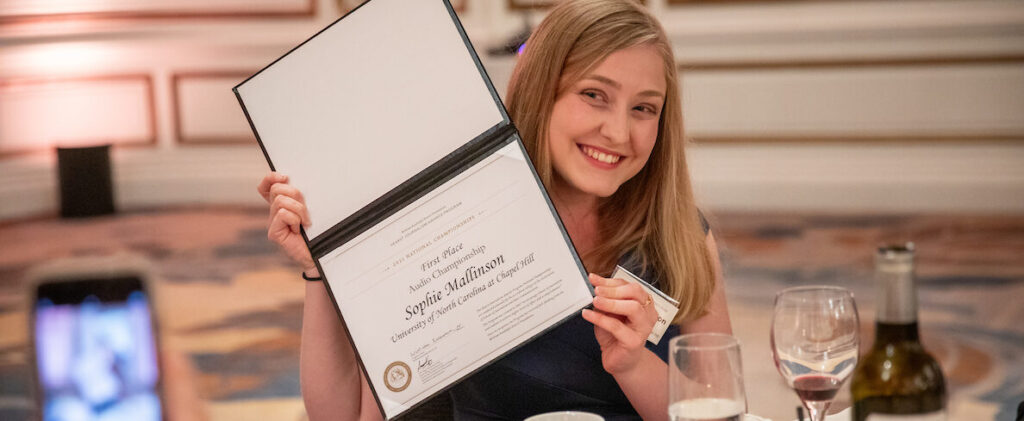
The Hearst Journalism Awards Program 2026/2027 is a national journalism competition that recognises outstanding work produced by undergraduate journalism students at accredited colleges and universities in the United States. Organised by the William Randolph Hearst Foundation, the programme provides scholarship awards to students who demonstrate excellence in writing, photojournalism, audio, podcasting, television and multimedia journalism.
The programme is sometimes described as the college journalism awards because it gives undergraduate students opportunities to compete in different journalism categories throughout the academic year. Successful participants can receive scholarship funding, professional recognition and opportunities to qualify for the national championship.
For the 2026/2027 competition year, the Hearst Journalism Awards Program has announced increased scholarship amounts and a total annual support package of up to $1 million for students and participating journalism schools.
However, this is not an open international scholarship. Participation is restricted to eligible undergraduate students attending accredited journalism programmes at participating colleges and universities in the United States.
About the Hearst Journalism Awards Program
The Hearst Journalism Awards Program was established in 1960 to support journalism education and recognise outstanding student journalists.
The programme is administered by the William Randolph Hearst Foundation and operates through accredited undergraduate journalism schools. Students compete in several categories during the academic year, with monthly competitions leading to national championship opportunities for top performers.
The 2026/2027 edition is the programme’s 67th annual competition year. It includes 14 competitions across writing, photojournalism, audio, podcasting, television and multimedia journalism.
Unlike conventional scholarships that require students to submit an application based mainly on academic grades or financial need, the Hearst programme evaluates the quality of actual journalism work. Entries must have been published, aired or posted while the student was enrolled in an eligible undergraduate journalism programme.
Participating schools select and submit the eligible entries on behalf of their students.
Hearst Journalism Awards Program 2026/2027: Quick Details
| Programme detail | Information |
|---|---|
| Programme name | Hearst Journalism Awards Program |
| Competition year | 2026/2027 |
| Organiser | William Randolph Hearst Foundation |
| Country | United States |
| Programme type | Journalism competition and scholarship awards |
| Eligible applicants | Undergraduate journalism students at participating accredited universities |
| Number of competitions | 14 |
| Competition categories | Writing, photojournalism, audio, podcast, television and multimedia |
| Monthly competition awards | $1,000 to $5,000 |
| Championship first-place award | $15,000 |
| Championship second-place award | $8,000 |
| Championship third-place award | $6,000 |
| Championship finalist award | $3,000 |
| Total annual programme support | Up to $1 million |
| Application method | Entry submitted through participating university |
| Official website | https://www.hearstawards.org/ |
The 2026/2027 award increases were announced by the Hearst Foundations on October 12, 2026.
Benefits of the Hearst Journalism Awards Program
The programme offers financial awards and professional recognition to students whose journalism work performs well in the monthly competitions and championship finals.
1. Monthly scholarship awards of up to $5,000
For the 2026/2027 competition year, the scholarship amounts for monthly competitions have increased.
| Competition placement | Scholarship award |
|---|---|
| First place | $5,000 |
| Second place | $4,000 |
| Third place | $3,000 |
| Fourth place | $2,000 |
| Fifth place | $1,000 |
These awards are provided for winning entries in the monthly competitions. The scholarship funds are sent to the winner’s accredited university for the student’s educational benefit.
2. National Championship scholarship awards
Top-performing students from the monthly competitions may qualify for the Hearst National Championship.
The 2026/2027 championship awards are:
| Championship placement | Scholarship award |
|---|---|
| First place | $15,000 |
| Second place | $8,000 |
| Third place | $6,000 |
| Finalists | $3,000 |
The championship provides another opportunity for outstanding student journalists to compete for additional scholarship funding.
3. Recognition for outstanding journalism
The programme recognises student work across different journalism disciplines. Successful participants can gain recognition for their reporting, writing, photography, broadcasting and multimedia storytelling.
4. Opportunity to compete nationally
Students who perform well in the monthly competitions may qualify for the national championship, where they compete against other top student journalists.
5. Support for participating universities
The programme also provides matching grants to participating journalism schools. In addition, each participating university receives a $250 stipend for every competition it enters, regardless of its students’ placements.
Hearst Journalism Awards Program+1
Competition Categories
The 2026/2027 Hearst Journalism Awards Program has 14 competitions across six broad areas.
1. Writing competitions
The writing division includes four competitions:
Feature Writing
Sports Writing
Personality/Profile Writing
Investigative Reporting, individual or team
These competitions recognise strong reporting, storytelling, research, writing and journalistic presentation.
2. Photojournalism competitions
There are two photojournalism competitions:
Photo I: News and Features
Photo II: Picture Story/Series
Students can enter the photo competitions even if they are not journalism majors or minors, provided they meet the other eligibility conditions.
3. Audio competition
The audio division includes an Audio News and/or Features competition. It recognises student-produced audio journalism.
4. Podcast competition
The podcast competition accepts news or feature podcasts and allows team or individual entries under its specific rules.
5. Television competitions
The television division includes:
Television I: Features
Television II: News
These categories recognise television journalism and student-produced broadcast work.
6. Multimedia competitions
The multimedia division has four competitions:
Multimedia I: Narrative Video Storytelling
Multimedia II: Innovative Journalism
Multimedia III: Enterprise Story, Individual
Multimedia IV: Enterprise Story, Team
The categories provide opportunities for students to demonstrate their ability to combine reporting, storytelling and digital media formats.
Eligibility Requirements for the Hearst Journalism Awards Program 2026/2027
Applicants must meet the programme’s academic, institutional and competition requirements. The awards are not open to every university student or professional journalist.
1. Attend an eligible accredited university in the United States
Applicants must attend a participating college or university with an accredited undergraduate journalism or mass communication programme.
The institution must meet the programme’s accreditation and membership requirements. Students attending universities without an eligible accredited journalism unit cannot enter.
2. Be an undergraduate journalism major or minor
Students entering the writing, audio, podcast, television and multimedia competitions must be undergraduate journalism majors or minors in the accredited programme when their work is published, aired or posted.
An exception applies to photojournalism entrants, who do not have to be journalism majors or minors.
3. Be enrolled at least half-time
Entrants must be enrolled at least half-time at their eligible institution.
Students must also meet the relevant enrolment conditions when their submitted work is published or distributed.
4. Be actively involved in campus media
Applicants must participate in campus media and have produced journalism work that can be submitted to the relevant competition.
Eligible work may include published articles, photographs, newscasts, podcasts and multimedia stories.
5. Have eligible journalism work
The submitted entry must be journalism and must have been published, aired or posted while the student was an undergraduate in the eligible programme.
Students cannot submit work that does not meet the publication and enrolment requirements.
6. Meet the professional experience restriction
The programme is not open to undergraduate journalism majors who have accumulated one year or more of full-time professional experience, or its equivalent, when their submitted work was published.
Multiple internships may count towards this limit if their combined duration reaches 12 months or more.
7. Meet the entry limit
Each participating university may submit no more than two individual entrants in each competition.
The university’s journalism department selects the students whose work will represent the institution.
8. Meet the competition-year limit
Students may not enter the programme for more than three competition years.
Students who have previously won first place in a championship cannot compete again in the same category.
9. Follow the artificial intelligence disclosure rules
All entries must disclose any use of artificial intelligence tools in creating or developing the work.
This includes AI used for research, reporting assistance, editing, generating or modifying photographs and videos, and improving story presentation.
Applicants should explain how and why AI was used where applicable.
Can International Students Apply?
The Hearst Journalism Awards Program is restricted to eligible undergraduate journalism programmes at accredited universities in the United States and its possessions.
International students studying at an eligible U.S. university may be able to participate if they meet all the programme requirements. The published rules do not establish a separate general nationality restriction.
However, students studying at universities in Nigeria or other countries outside the eligible institutional system cannot enter directly.
For Nigerian students, the relevant distinction is whether they are enrolled in an eligible accredited U.S. institution, not simply whether they are studying journalism.
Documents and Materials Required
The Hearst Journalism Awards Program evaluates actual journalism work rather than a conventional scholarship application based on personal essays and financial documents.
The materials required depend on the competition category.
Applicants should prepare:
The published article, photograph, audio recording, podcast, television report or multimedia project being entered.
The publication, broadcast or posting date.
The name of the campus media organisation or other publication.
Supporting information identifying the student as the work’s creator.
A letter from an editor when the entry was published, aired or posted in off-campus media, confirming that the work belongs to the entrant.
Details of any AI tools used in creating or developing the entry, with the required disclosure.
Any additional technical information or files requested for the relevant competition.
For team competitions, applicants should follow the specific team-entry rules. Double bylines and group entries are prohibited in most categories, with exceptions for the designated team competitions.
The participating university’s journalism department provides the entry instructions and submits the selected work.
How to Apply for the Hearst Journalism Awards Program 2026/2027
Students cannot simply register independently and submit an entry without their university’s involvement. The participating journalism department controls access to the entry process and selects eligible submissions.
Follow these steps:
Step 1: Confirm that your university is eligible
Check whether your college or university has an accredited undergraduate journalism programme that participates in the Hearst Journalism Awards.
You can review the official rules and accreditation information on the programme website.
Step 2: Contact your journalism department
Speak with your journalism department administrator, programme coordinator or professor.
Ask whether your university is participating in the 2026/2027 competition year and what internal selection process it uses.
Step 3: Identify the appropriate competition
Choose the category that matches your work.
For example, a published feature article may qualify for Feature Writing, while a student-produced news video may fit a television or multimedia category.
Step 4: Prepare your journalism entry
Collect the original published, aired or posted work and the supporting information required for the category.
Make sure the work meets the publication-date and undergraduate-enrolment rules.
Step 5: Follow the university’s selection process
Each participating school selects up to two individual entries per competition, except for the specified team competitions.
Your department will determine which students’ work is submitted.
Step 6: Complete the online entry process
The university’s journalism department or authorised administrator provides access to the online application and entry instructions.
Students should follow the instructions provided by their school and submit all required materials before the relevant competition deadline.
Step 7: Check the competition results
The programme’s judges evaluate the submitted work and determine the monthly placements.
Students who qualify for the national championship may receive further instructions from the programme.
2026/2027 Competition Deadlines
The Hearst programme uses separate deadlines for each competition. Students must check the deadline for the category in which their work is being entered.
| Competition | Deadline |
|---|---|
| Feature Writing | November 3, 2026 |
| Photo I: News and Features | November 10, 2026 |
| Television I: Features | November 17, 2026 |
| Multimedia I: Narrative Video Storytelling | November 17, 2026 |
| Sports Writing | December 15, 2026 |
| Audio: News and/or Features | January 19, 2027 |
| Multimedia II: Innovative Journalism | January 26, 2027 |
| Personality/Profile Writing | February 2, 2027 |
| Photo II: Picture Story/Series | February 9, 2027 |
| Multimedia III: Enterprise Story, Individual | March 2, 2027 |
| Investigative Reporting, Team or Individual | March 9, 2027 |
| Television II: News | March 23, 2027 |
| Podcast: News or Feature, Team or Individual | April 6, 2027 |
| Multimedia IV: Enterprise Story, Team | April 13, 2027 |
The official calendar lists the audio competition deadline as January 19, 2026, even though it appears in the 2026/2027 calendar. Students should confirm the correct date with their journalism department or the Hearst programme office before submitting an audio entry.
Selection and Judging Process
The Hearst Journalism Awards Program uses professional judges to evaluate student journalism entries.
The programme states that 12 media professionals, including journalists and editors, judge the submitted work. Judges review entries and assign points to their preferred submissions. The scores are then compiled by the Hearst Foundations to determine the competition rankings.
Students who place highly in the monthly competitions may qualify for the national championship. The number of championship places depends on the competition category.
For example, writing, photojournalism, television and multimedia have different qualification arrangements. Audio and podcast competitions also have their own rules.
The championship brings together top-performing students for additional journalism assignments and scholarship awards.
Important Conditions Applicants Should Understand
Before entering the Hearst Journalism Awards, students should understand the following rules:
University selection is compulsory. Students must have their entries submitted through an eligible participating institution.
There is no general individual application route. Access codes and entry instructions are provided to university administrators and professors.
The entry must be journalism. Creative work that does not meet the programme’s journalism requirements is not eligible.
The publication timing matters. The work must have been published, aired or posted while the student met the relevant undergraduate enrolment requirements.
Most categories prohibit group entries. Only the designated team competitions allow team submissions.
AI use must be disclosed. Entrants must clearly identify any use of AI in producing or developing their work.
Scholarship payments go through the university. The funds are sent to the accredited institution for the student’s educational benefit.
- Copyright remains with the entrant. However, the programme receives a non-exclusive, perpetual, worldwide licence to use and display submitted work and the entrant’s name and likeness under the published rules.
Frequently Asked Questions
1. What is the Hearst Journalism Awards Program?
It is an annual journalism competition organised by the William Randolph Hearst Foundation. It recognises outstanding undergraduate journalism through competitions in writing, photojournalism, audio, podcasting, television and multimedia.
2. How much is the Hearst Journalism Awards scholarship worth?
For 2026/2027, monthly competition awards range from $1,000 to $5,000. National Championship awards range from $3,000 for finalists to $15,000 for first place.
3. Is the Hearst Journalism Awards Program open to international students?
International students enrolled at eligible accredited U.S. universities may participate if they satisfy the programme requirements. Students studying at institutions outside the eligible U.S. system cannot enter directly.
4. Can Nigerian university students apply?
Students attending universities in Nigeria cannot enter directly because the programme is limited to eligible accredited undergraduate journalism programmes in the United States and its possessions. A Nigerian student enrolled at an eligible U.S. institution may qualify if they meet the other rules.
5. Can graduate students apply?
No. The programme is intended for undergraduate students. Graduate students are not eligible to enter.
6. Must applicants study journalism?
Students entering most categories must be undergraduate journalism majors or minors in the accredited unit. An exception applies to students entering the photojournalism competitions.
7. Can students submit work published outside their university?
Yes. Work published, aired or posted in off-campus media may be submitted. However, it must be accompanied by a letter from the editor confirming that the entry is the student’s work.
8. How many students can each university enter?
Each participating university can submit up to two individual entrants in each competition. Specific team competitions have separate entry allowances.
9. Can students submit work created with AI?
AI use is not automatically prohibited, but it must be clearly disclosed. Students must explain how and why AI was used in the creation or development of their journalism entry.
10. When are the Hearst Journalism Awards deadlines?
Each competition has a separate deadline. The first 2026/2027 deadlines are Feature Writing on November 3, 2026, and Photo I on November 10, 2026.
11. How do students apply for the programme?
Students must contact their university’s journalism department. The school selects eligible entries and provides access to the online submission process.
12. Where can I find the official Hearst Journalism Awards application?
Visit the official Hearst Journalism Awards website. Students should also contact their journalism department for the entry instructions and login details.
13. Who can I contact for application assistance?
Students and university representatives can contact the Hearst Journalism Awards programme office at jwatten@hearstfdn.org for information about entry procedures.
Conclusion
The Hearst Journalism Awards Program 2026/2027 provides undergraduate journalism students at eligible U.S. universities with opportunities to earn scholarship awards and gain recognition for outstanding journalism.
With monthly awards of up to $5,000 and National Championship prizes reaching $15,000, the programme supports excellence across writing, photojournalism, audio, podcasting, television and multimedia reporting.
However, participation is controlled by accredited universities, and students cannot submit entries independently. Eligible undergraduates should contact their journalism departments, identify the appropriate competition and prepare their work before the relevant deadline.
For the latest rules, competition dates and entry information, visit the official Hearst Journalism Awards website.




No comments yet. Be the first to share your thoughts.