

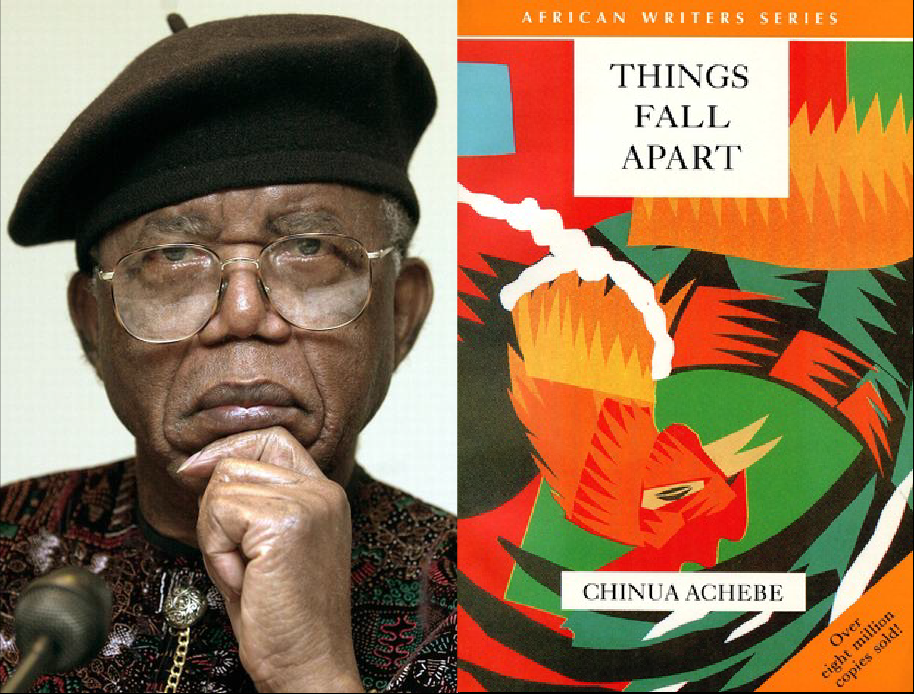
Cultural Affirmation in Chinua Achebe’S Things Fall Apart and Arrow of God
Abstract
This research work was on cultural affirmation in Chinua Achebe’’ s Things Fall Apart and Arrow of God. With reference to the analysis of the two novels, the study has shown that Achebe’s novels dramatize African cultural conflicts during the colonial rule its consequences to African ways of life. The novels also portray the history of the colonizers and the colonized at the time of pre-colonial era.
It is on this point that Achebe insists that art is the service of man. For instance he uses traditional Igbo religious, political philosophical and artistic motifs in Arrow of God combine to illumine the abstract notion of duality. From the opinion of critics in the review of related literature, the research has shown that Chinua Achebe’s writing portrays African’s cultural identity and its ways of life. The study further revealed that Achebe’s work serves as an exemplar of Igbo tradition and social formation in the society.
CHAPTER ONE
INTRODUCTION
1.1 Background to the study
Chinua Achebe is one of Africa’s most influential literary figures, renowned for his portrayal of African cultural identity, indigenous traditions, and the social changes that accompanied colonialism. His novels, Things Fall Apart and Arrow of God, explore cultural affirmation through the customs, religious beliefs, political structures, and communal values of Igbo society. These works demonstrate how traditional African communities maintained their identities while confronting internal conflicts and external pressures brought about by colonial rule.
In Arrow of God, Achebe examines the cultural and political life of Umuaro, a community comprising six villages, through the experiences of Ezeulu, the chief priest of Ulu, the community’s principal deity. Ezeulu occupies an important religious position, but his authority is not absolute. His relationship with the elders, the villagers, and the colonial administration reveals the tensions between traditional institutions and changing social realities. His eventual downfall represents more than a personal tragedy, as it also reflects the vulnerability of indigenous religious authority and the disruption of established cultural practices under colonial influence. Through Ezeulu’s experiences, Achebe explores the complexities of leadership, communal responsibility, human limitations, and the struggle to preserve Igbo traditions in a changing society.
Similarly, in Things Fall Apart, Achebe portrays cultural affirmation through the character of Okonkwo, a respected wrestler and influential member of Umuofia. His reputation grows after he defeats Amalinze the Cat, a renowned wrestler who had remained undefeated for seven years. Okonkwo’s achievements, physical strength, wealth, and social standing reflect the values that his community associates with masculinity, hard work, courage, and personal accomplishment. Motivated by his determination to distance himself from the memory of his father, Unoka, whom he considers unsuccessful, Okonkwo strives to become a prominent figure in his society. His ambition, however, also exposes the limitations of rigid cultural expectations, particularly when his fear of appearing weak influences his decisions and relationships.
Achebe further demonstrates how cultural identity is shaped by the interaction between individual ambitions, communal expectations, and external forces. While Okonkwo struggles to maintain his status within a society experiencing significant religious and political changes, Ezeulu faces the consequences of defending his religious authority amid colonial interference and internal divisions. Although the two protagonists encounter different circumstances, their experiences reveal the strengths, contradictions, and vulnerabilities of traditional Igbo institutions.
It is against this background that this study examines cultural affirmation in Chinua Achebe’s Things Fall Apart and Arrow of God, with particular attention to Igbo customs, religious beliefs, social organisation, leadership, and communal values. The study also investigates how Achebe represents the preservation of African cultural identity, the challenges posed by colonialism, and the consequences of cultural conflict for individuals and their communities. Through a comparative analysis of the two novels, the research seeks to deepen the understanding of cultural affirmation and its significance in African societies.
1.2 Statement of the Problem
One of the major concerns in this research work is a way of investigating the cultural affirmation in Achebe’s Things Fall Apart and Arrow of God with reference to the African society.
1.3 Purpose of the study
The main purpose of this research is to examine cultural affirmation in Chinua Achebe’s Arrow of God and Things Fall Apart. The study seeks to identify and analyse the various African cultural practices, traditions, religious beliefs, social values, and indigenous institutions portrayed in the two novels. It also aims to explore how Achebe represents the preservation of Igbo cultural identity, the influence of traditional customs on individual and communal life, and the impact of colonialism on African societies. Through a comparative analysis of both novels, the research will highlight the significance of cultural heritage in shaping African identity and examine how indigenous traditions are maintained, challenged, and transformed in response to social and cultural changes.
Cultural Affirmation in Chinua Achebe’S Things Fall Apart and Arrow of God
1.4 Significance o the study
This research will be significance to the entire African society what Achebe’s writings is all about, with reference to the two novels in this research work. The study will also be of great important to literature students and other researchers who will find this research work important.
1.5 Objectives of the study
The following are the objectives of this research work are;
- to investigate the cultural affirmation as portrayed by Achebe in these two novels under study.
- to examine the author’s aims of writing Arrow of God and Things Fall Apart.
- to analyze and portrays what cultural affirmation is all about and the author’s intension towards African practices.
1.6 Research Methodology
The primary method in this research in this research work will basically focus on Achebe’s Arrow of God and Things Fall Apart, while the secondary method will examine other African literary novels, library, internet, articles, and magazine for more information on the research work.
1.7 Scope and Limitation of the study
The scope of this research work will be limited to Achebe’s Arrow of God and Things Fall Apart.
1.8 Bio- Data of Chinua Achebe
Chinua Achebe, whose full birth name was Albert Chinualumogu Achebe, was born on 16 November 1930 in Ogidi, an Igbo town in southeastern Nigeria. He was raised by his parents in a society deeply rooted in Igbo traditions, customs, religious beliefs, and communal values. These cultural influences later became important elements of his literary works. Achebe demonstrated strong academic ability during his early education and gained admission to study medicine at the University College of Nigeria, which later became the University of Ibadan. However, he eventually changed his course of study to English, history, and theology, developing a deeper interest in literature, world religions, and traditional African culture.
While studying at the university, Achebe began developing his writing skills and exploring the representation of African societies in literature. After graduating in 1953, he joined the Nigerian Broadcasting Service (NBS), where he worked in broadcasting and eventually became involved in the organisation’s programming activities. His professional career took him to Lagos, where he gained experience that influenced his understanding of Nigerian society and its cultural diversity.
Achebe achieved international recognition following the publication of his first novel, Things Fall Apart, in 1958. The novel explores traditional Igbo society and the effects of British colonialism through the experiences of its protagonist, Okonkwo. Its success established Achebe as a leading voice in African literature and helped challenge negative representations of African cultures in colonial writing. He subsequently published several important novels, including No Longer at Ease in 1960, Arrow of God in 1964, A Man of the People in 1966, and Anthills of the Savannah in 1987. These works examine themes such as cultural identity, colonialism, political corruption, social change, and the complexities of leadership in African societies.
Achebe wrote primarily in English, a decision that generated considerable discussion about language and African literature. He defended the use of English as a means of communicating African experiences to a wider audience, while also adapting the language to reflect African idioms, proverbs, oral traditions, and cultural perspectives. In 1975, he delivered his influential lecture, An Image of Africa: Racism in Conrad’s Heart of Darkness, in which he strongly criticised Joseph Conrad’s representation of Africa and Africans. The lecture, later published in The Massachusetts Review, became an important contribution to debates about colonial literature, racism, and the representation of Africa in Western writing.
Achebe also made significant contributions to education and literary scholarship. Following a serious automobile accident in Nigeria in 1990, he received medical treatment in the United States and continued his academic career there. He later taught at Bard College in New York, where he served as the Charles P. Stevenson Professor of Languages and Literature. He subsequently joined Brown University as a professor of African studies. Through his teaching, essays, lectures, and literary works, Achebe influenced generations of writers, students, and scholars interested in African history and literature.
In his personal life, Achebe married Christiana Chinwe Okoli in 1961. She worked with the Nigerian Broadcasting Corporation, the successor to the Nigerian Broadcasting Service. Their marriage produced four children: Chinelo, Ikechukwu, Chidi, and Nwando. Despite his international recognition, Achebe remained closely connected to Nigerian culture and continued to explore the experiences of African people through his writing.
In addition to his novels, Achebe wrote short stories and other literary works that examined family relationships, traditional beliefs, colonial influence, and the challenges of postcolonial African society. His notable short stories include Marriage Is a Private Affair (1952), Dead Men’s Path (1953), The Sacrificial Egg (1959), and Civil Peace (1971). His short fiction collection Girls at War and Other Stories was published in 1972. These stories further demonstrate his ability to examine social conflict and cultural change through everyday experiences.
Chinua Achebe died on 21 March 2013 in Boston, Massachusetts, United States, at the age of 82. His literary legacy continues to influence African writing and global discussions about culture, identity, colonialism, and representation. Through novels such as Things Fall Apart and Arrow of God, Achebe preserved important aspects of Igbo cultural heritage while examining the tensions that arise when traditional societies encounter colonial power and social transformation.
Cultural Affirmation in Chinua Achebe’S Things Fall Apart and Arrow of God
CHAPTER FIVE
SUMMARY, CONCLUSION AND RECOMMENDATIONS
5.1 Summary
The research work was on cultural affirmation in Achebe’s Arrow of God and Things Fall Apart. Some critics like, Okpewho, Isodore and Innes, Catherine Lynnette, Wren Robert, and Brooker Keith says, Achebe’s novel are the intersection of African tradition, particularly Igbo varieties and modernity, especially as embodied by European colonialism.
For instance, one of the Nigerian English professions and critic Ernest Emenyonu describes Achebe’s Things Fall Apart and Arrow of God as colonial novels and colonial experience with his systematic emasculation of the entire culture “(176). No doubt, Achebe’s novels focus on the traditions of Igbo society, the clash of western and traditional Africans values during and after the colonial era. His style relies heavily on the Igbo oral tradition, and combines straight forward narration with representations of folk stories, proverbs, and oratory.
In Things Fall Apart, the author portrays how Okonkwo struggles with the legacy of his father, a shiftless debtor fond of playing the flute as well as the complications and contradictions that arise when white missionaries arrive in the village of Umuofia. Consequently, the above selected novels as portrayed by the author examine African cultural affirmation in the African society.
5.2 Conclusion
The research work has examined cultural affirmation in Achebe’s Things Fall Apart and Arrow of God. Achebe’s writing is about African society, in telling from an African point of view the story of the colonialism that African culture had been savage and primitive. For instance, in Things Fall Apart Achebe portrays how western culture is portrayed as been arrogant ad ethnocentric, insisting that the African culture needed a leader.
As it had no kings or chiefs, Umuofia culture was vulnerable to invasion by western civilization. On the other hand, critics have praised Achebe’s neutral narration and have described Things Fall Apart and Arrow of God as realistic novels. Much of the critical discussion about things fall apart concentrates on the socio-political aspects of the novel, including the friction between the members of ifbo society as presence of western government and beliefs.
According to Enerst Emenyonu as he commented that, “Achebe’s” Things Fall Apart and Arrow of God are indeed a classic study of cross-cultural misunderstanding and the consequences to the rest of humanity, when a belligerent culture or civilization, out of sheer arrogance and ethnocentrism, takes it upon itself to invade another culture, another civilization “(11).Achehe portrays the culture as having a religion,a government, a system of money and artistic tradition, as well as a judicial system.
5.2 Recommendations
Based on the findings, the researcher made the following recommendations;
- Educational planners should recommends Achehe” novels into over educational system because, the novels are realistic ones, with good cultural identity in the society of Africa.
- As literature mirror the society, novels with good moral lessons should be recommended in our school system.
- African society should refined their practices most especially, what they has lost and how the inhabitants have fallen victims In African culture.




No comments yet. Be the first to share your thoughts.