
The Influence of Counseling and Career Choices among Secondary School Students
Abstract
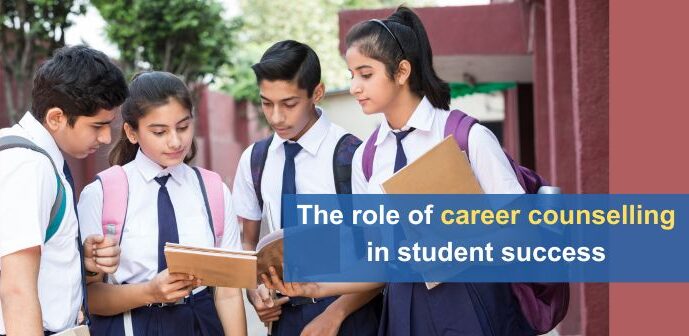
Counselling plays a significant role in helping students develop a clear understanding of the world of work and the various career opportunities available to them. Through effective counselling services, students receive relevant educational information that enables them to select subjects that align with their interests, abilities, talents, and future career aspirations. Counsellors in secondary schools provide educational, vocational, and personal-social guidance to support students in making informed academic and career decisions. Educational counselling helps students understand subject requirements and academic pathways, vocational counselling introduces them to different occupations and career opportunities, while personal-social counselling assists them in understanding themselves, managing personal challenges, and developing the confidence required to make appropriate decisions about their future.
The contributions and findings of various researchers and authors have demonstrated the importance of counselling services in helping students select subjects that correspond with their preferred careers and long-term aspirations. These studies indicate that students who receive appropriate guidance are better positioned to understand the relationship between their subject combinations and the qualifications required for different professions. Counselling also helps students identify their strengths and weaknesses, explore available career options, and avoid making academic decisions based solely on peer pressure or misconceptions about particular occupations. Consequently, effective counselling can improve students’ awareness of career opportunities and enable them to make subject choices that support their educational progress and future employment prospects.
Parental influence is another important factor affecting students’ subject selection and career decisions. Parents often play a significant role in shaping their children’s educational expectations because of their experience, values, financial circumstances, and aspirations for their children’s future. However, some parents choose subjects or recommend careers without adequately considering their children’s abilities, interests, talents, and personal preferences. Such decisions may create difficulties for students who feel pressured to pursue academic pathways that do not correspond with their strengths or ambitions. In this regard, school counsellors can help bridge the gap between parental expectations and students’ individual interests by providing appropriate guidance and encouraging discussions that consider the abilities, preferences, and future goals of the students.
To guide the research, three research objectives were formulated, and three corresponding hypotheses were postulated. A structured questionnaire developed by the researcher was used to collect the necessary data from the respondents. The information obtained was analysed using the independent-samples t-test statistical technique to examine the relevant differences in the responses of the groups considered in the study. The use of this statistical method provided a basis for testing the formulated hypotheses and determining whether the observed differences were statistically significant. The questionnaire approach also enabled the researcher to obtain information relevant to the influence of counselling services on students’ career choices in the study area.
The findings revealed that educational, vocational, and personal-social counselling significantly influenced career choice among secondary school students in Nsit Ibom Local Government Area. This suggests that counselling services are important in helping students understand themselves, explore career opportunities, and make informed decisions about subject selection and future occupations. The findings further emphasise the need for secondary schools to strengthen their guidance and counselling programmes and ensure that students have access to qualified counsellors who can provide appropriate academic, vocational, and personal support. Parents and teachers should also collaborate with counsellors to encourage students to make career decisions based on their abilities, interests, and aspirations. Effective counselling can therefore contribute to improved subject selection, better career planning, and the development of students who are better prepared to pursue further education and participate meaningfully in the world of work.
CHAPTER ONE
INTRODUCTION
1.1 Background to the Study
Counselling is an integral element of counselling that provides the forum for interaction between a counsellor and counselee. Counselling is a process of assisting a client to overcome problems and become happier and more effective individual in the environment. Operationally, counselling is defined as a helping relationship between counsellor and counselees through which the counsellor helps counselees (students) to maximize their potentials by providing career information and awareness creation of job opportunities in the millennium world of work Nwoje (2011)
Counseling is the process of helping an individual helping to help himself and to develop his potentialities to the fullest by utilizing maximum opportunities provided by the environment. We need to understand the dimension of counseling in order to appreciate the attendance functions expected of counselors or counseling experts in schools. Mutic (2009) defined counseling as a learning oriented process which occurs in an interactive relationship with the aim of helping the clients to learn more about themselves. Counseling is therefore aimed at bringing about maximum development and self-realization of human potentials for the benefit of the individual and the society. Gichinga (2008) observes that counseling programme has had impact in secondary schools in Nigeria by helping individual student to choose and pursue available careers. Counseling programme has three major dimensions. These are: educational dimension, vocational dimension, and personal-social counseling.
These three dimensions are not mutually exclusive but inter-related Ekanem and Eneh (2005). They are inter-related because any problem in one area may affect the other. For example, a personal-social problem can create an educational problem while a vocational problem may arise from an educational or personal-social problem. It is the individual who is at the centre of all these three. As Denga (2012) puts it basic to all purposes of student counseling is the objective of the student’s total development. He further stated that educational counseling is mainly at helping students solve their educational problems.
Such problems as listed by Denga (2007) include; how to make appropriate choices of subjects and educational programmes; how to develop effective study habits; how to make good grades in school; how to choose appropriate institutions for further studies; how to cope with examination anxiety and how to budget study time. In order to achieve the objectives of educational counseling the counselor has to do. In conjunction with other school personnel, he should organize orientation for new students, have individual or group educational concerning with the students and assess students’ study behaviour in order to identify effective study habit and consequently help remedy them.
According to Makinde (2010) counseling programme is one of the roles for school counselor use to help students who have difficulties in making a career choice. This means that vocational counseling in school should be employed to assist students to make realistic and appropriate vocational decisions. Realistic decisions refer to those decisions that are not beyond the reach of those making them.
This means that students should aspire to enter occupations that suit their interests, values and abilities. Ekanem and Eneh (2005) stated that the third component of counseling and counseling in school setting is personal-social and psychological problems most of which are of a privatized nature. Typical examples include interpersonal relationship problems, family problems, emotional disturbances, phobia, drug abuse and sexual difficulties among others. These problems cut across academic performance and also provide basis for failure in occupational pursuits.
1.2 Statement of the Problem
Effective counseling is essential in every school. An organized counseling programme will offer right environment for the growth and development of the educational system in our schools. Nwachukwu and Ugwuegbulam(2006) thus see the need for introduction of counseling in schools as to give students career information and to assist them to make appropriate and realistic educational, social-personal and vocational choices and to produce students who are properly adjusted socially and emotionally and who are mature enough to face the world after the completion of their secondary education.
The society in which the child grows is not immune from a number of disabling societal and individual problems. Such as lack of guiding values, lack patriotism, acrimonious inter-personal conflicts and self-leadership.
Wrong professional or vocational choice by students has been link to lack of proper counseling by the teachers and school counselors despite numerous ways in which government has facilitated the introduction of counseling programme in school. Still, there is great height of indiscipline among students which contributed to wrong choice of career in life. The study therefore sought to find out the influence of counseling services and career choice among secondary school students in Nsit Ibom Local Government Area.
1.3 Purpose of the Study
The purpose of this study was to investigate the influence of counseling and career choices among secondary school students in Nsit Ibom Local Government Area. Specifically, the study intends to:
(i) assess the influence of educational counseling on career choice among secondary school students in Government in Nsit Ibom Local Government Area
(ii) examine the influence of vocational counseling on career choice among secondary school students in Government in Nsit Ibom Local Government Area
(iii) determine the influence of social-personal counseling on career choice among secondary school students in Government in Nsit Ibom Local Government Area
The Influence of Counseling and Career Choices among Secondary School Students
1.4 Significance of the Study
The outcome of this research will help to educating and serve as a guide to both parent and schools on the effect of counseling on the academic performance of students. This research will also serve as a resource base to other researchers interested in carrying out further research in this field subsequently, if applied, will go to an extent to providing new explanation to the topic. It will help the teachers and the counseling counselors to evaluate the students with special need and difficulties. It will serve as an effective measure in addressing the challenges facing secondary school students in Nsit Ibom Local Government Area.
It will also be of help to school administrators in assessing their contribution to counseling programme in schools as its influence academic performance of student in their schools. When counseling programme is well conceptualized by educational policy makers and implemented by the teacher counselor with the support of the school, the students will benefit by improving their academic achievements and self-ac actualization. The result of the study will also help the students to create a good and cordial relationship with their teacher counselor. It will bring self-concept to the students that will help them understand him/her and regulate their behavior.
1.5 Research Questions
The following research questions were formulated to guide a study:
- To what extent does educational counseling influence career choice among secondary school students in Government in Nsit Ibom Local Government Area
- To what extent does vocational counseling influence career choice among secondary school students in Government in Nsit Ibom Local Government Area?
- To what extent does social-personal counseling influence career choice among secondary school students in Government in Nsit Ibom Local Government Area?
1.6 Research Hypotheses
In order to guide the study, the following research hypotheses are postulated:
- There is no significant influence of educational counseling on career choice among secondary school students in Government in Nsit Ibom Local Government Area
- There is no significant relationship between vocational counseling on career choice among secondary school students in Government in Nsit Ibom Local Government Area
- There is no significant relationship between social-personal counseling on career choice among secondary school students in Government in Nsit Ibom Local Government Area
1.7 Delimitation of the Study
This research work focuses on the influence of counseling dimensions on academic performance of Government students in secondary school in Nsit Ibom Local Government Area of Akwa Ibom State. This research work covers only public secondary schools in Nsit Ibom Local Government Area. Therefore the researcher focused her attention on that topic and only in her study area which is Nsit Ibom Local Government Area
1.8 Limitation of the Study
The researcher encountered some difficulties in obtaining information for the study such as difficulty in obtaining information from the respondents, time constraint and shortage of finance. The research was also limited due to the inability of the researcher to cover all the public secondary schools in Nsit Ibom Local Government Area of Akwa Ibom State as the title suggest.
1.9 Definition of Terms
Educational counseling: This is an assistance given to pupil individually and through group techniques to help them function more effectively in their school progress.
Vocational counseling: It is the process of helping the individual to ascertain, accept, understand and apply the relevant facts about the occupational world which are ascertained through incidental and planned explanatory activities.
Social counseling: This is meant to provide assistance in all problems which do not come within the purview of educational and vocational counseling.
CHAPTER TWO
REVIEW OF RELATED LITERATURE
The chapter is concerned with the review of related literature by other researchers. The review is carried out under the following sub-headings:
- The Concept of Counselling
- Educational counselling and career choice among secondary school students
- Vocational dimension and career choice among secondary school students Social/personal counselling and career choice among secondary school students
- Summary of review of related literature.


No comments yet. Be the first to share your thoughts.